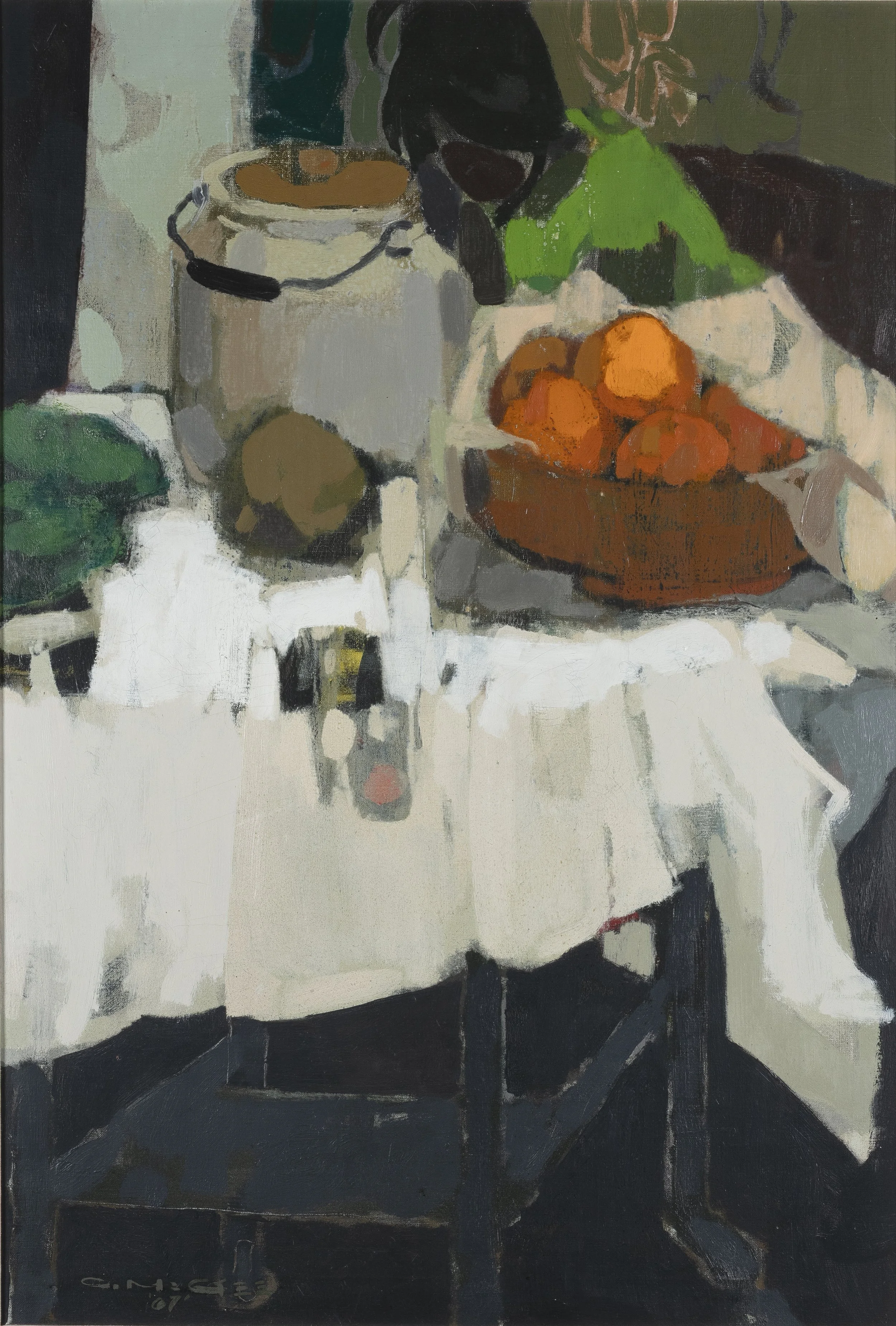
Early Works from the 1960s by
Charles Mc Gee (1924-2021)
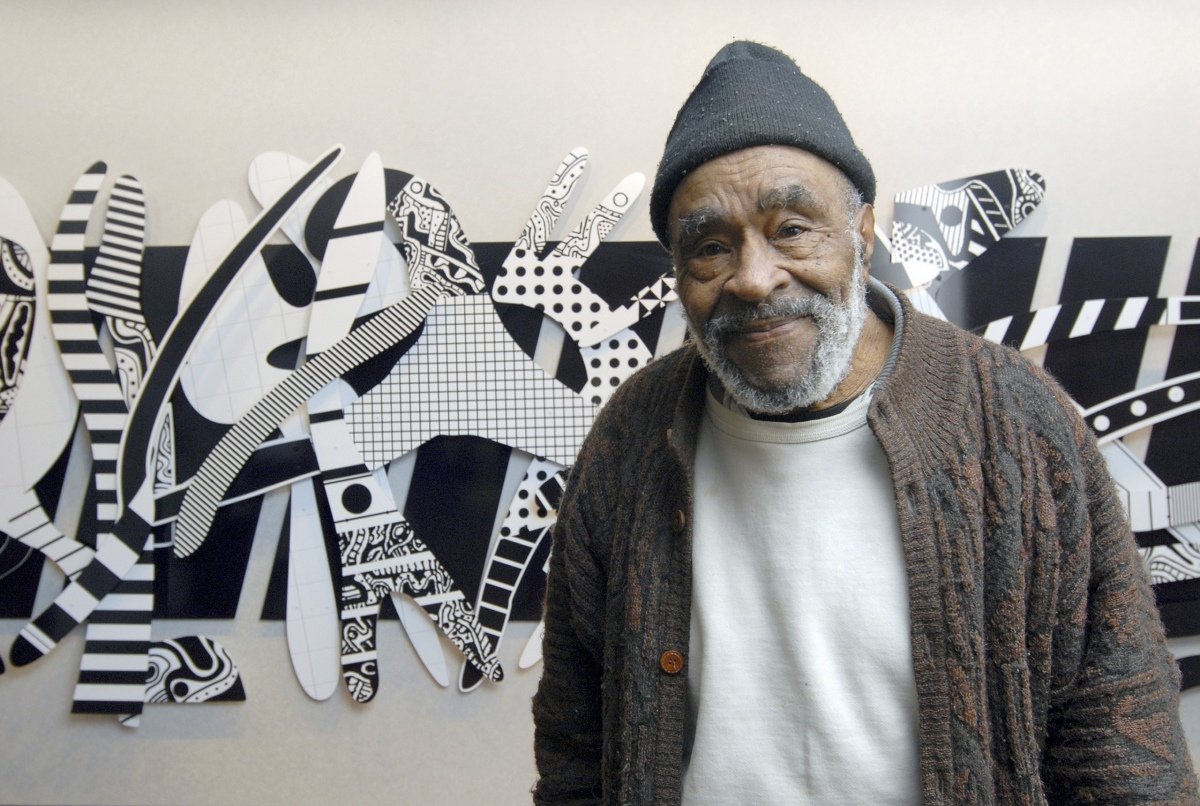
Charles McGee, Photo by Ray Manning
Charles McGee came to Detroit at the age of 10, when he and his mother moved from his grandfather’s sharecropper farm in Clemson, South Carolina. He had no educational opportunities in the South as a Black child, so he could not read or write when he arrived in Detroit. At an early age, he was tasked with creating posters for school events, and he immediately took to it. His talent did not go unnoticed, and he was allowed to start taking art classes through the public library and the Detroit Institute of Arts. His mother died when he was in the tenth grade, and he quit school to work on a W.P.A. painting project.
McGee served in the Marines from 1943 to 1947, and upon his return, found work in the automotive industry. He was later hired by the Detroit Arsenal Tank Plant as a cartographer and statistical draftsman. McGee used the GI Bill to study art at the Society of Arts and Crafts from 1947 to 1950, where he met fellow artists Hughie Lee-Smith, Harold Neal, and James Lee. It was here that he was rigorously trained in drawing and design before painting, in line with the curriculum at SAC. McGee studied drawing with Guy Palazzola; in fact, Palazzola was, according to McGee,
“…teaching a classical type of art. And he was very into precise drawing. I found that this sort of suited my taste particularly at that particular time. I thought that, not knowing that much about art, it was necessary to learn how to draw and draw well and I felt that from that I would be able to branch off into anything that I wanted to do.”
Under Palazzolo’s tutelage, McGee became a very sophisticated draftsman, as seen, for example, in the three skillfully executed drawings included in this auction. Day-to-day necessities demanded that McGee work in various hard-labor jobs throughout his life, but he always managed to include an artistic element, whether it was taking classes in his free time or incorporating art skills in the job itself.
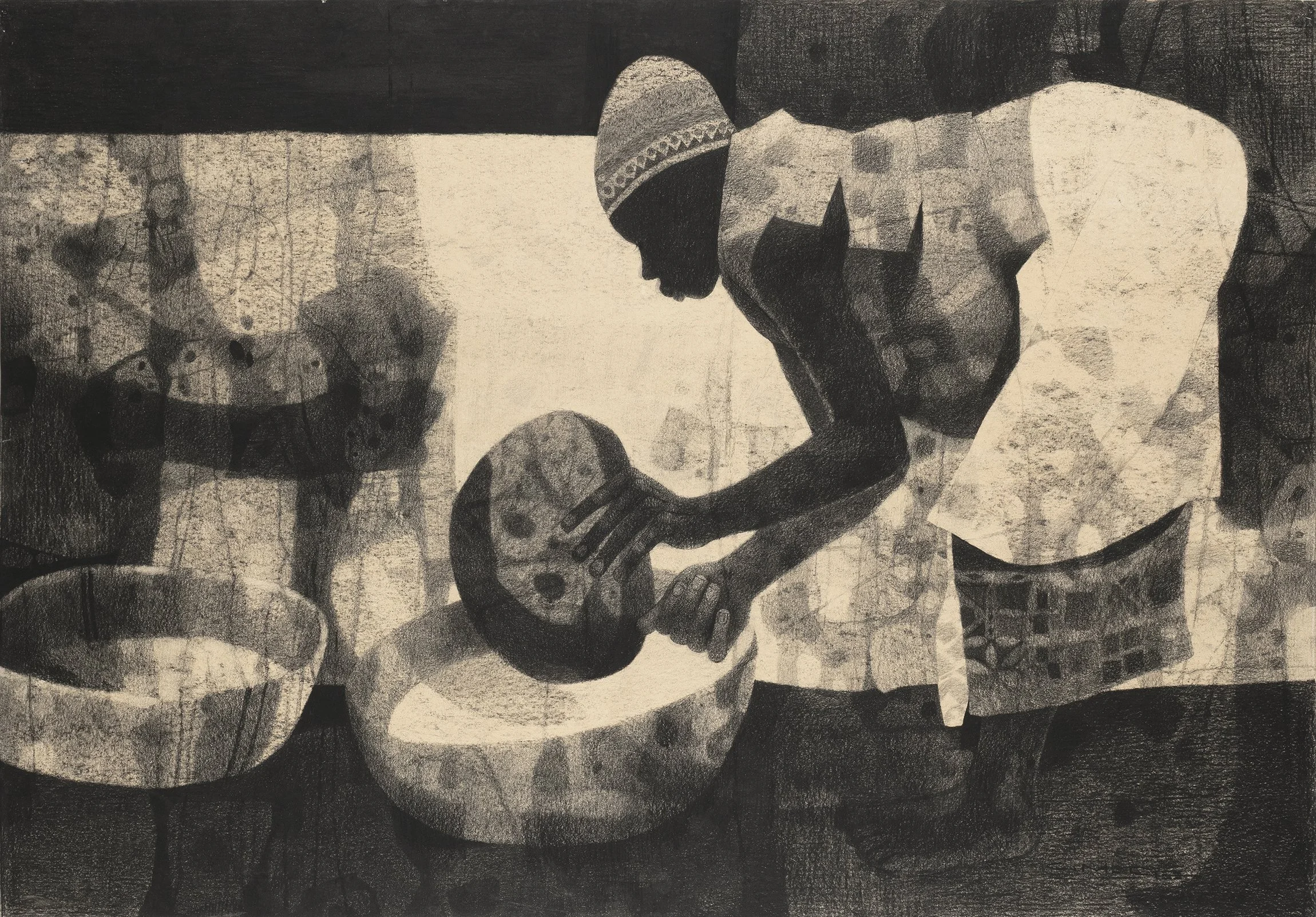
c. 1965
charcoal and kneaded eraser on board
29-1/2 x 42 inches
signed
McGee regularly exhibited in Detroit, and by 1958, he and 14 other Black artists founded Contemporary Studio, one of the earliest Black-operated institutions in the city. Contemporary Studio held art exhibitions, classes, seminars, and even auctions. His work in the 1950s and 1960s, like the majority of the Contemporary Studio artists, was primarily figurative in nature. In 1969, McGee opened Gallery 7, specifically to exhibit work by Black artists. The same year, the exhibition Seven Black Artists opened. The show was organized by McGee at the request of the Detroit Artists Market.
Myers writes
“McGee seems to have been one of the earlier African-American artists of the post-WWII era to be inspired by African art and culture , especially by that of West African from where most of the ancestors of Black Americans came. According to McArthur Binion, an artist and long-time friend of McGee, McGee was ‘Afro-centric’ long before anyone else.” In the drawings, “Spanish Lace” and untitled, the women are depicted in African or African-inspired dress. McGee was familiar with many types of African textiles and incorporated them into the dress of his subjects or even abstracted patterns in the background.”
REF: Julia R. Myers, Energy: Charles McGee at 85, University Art Gallery, Ford Art Gallery,
Eastern Michigan University, Ypsilanti, MI, 2009
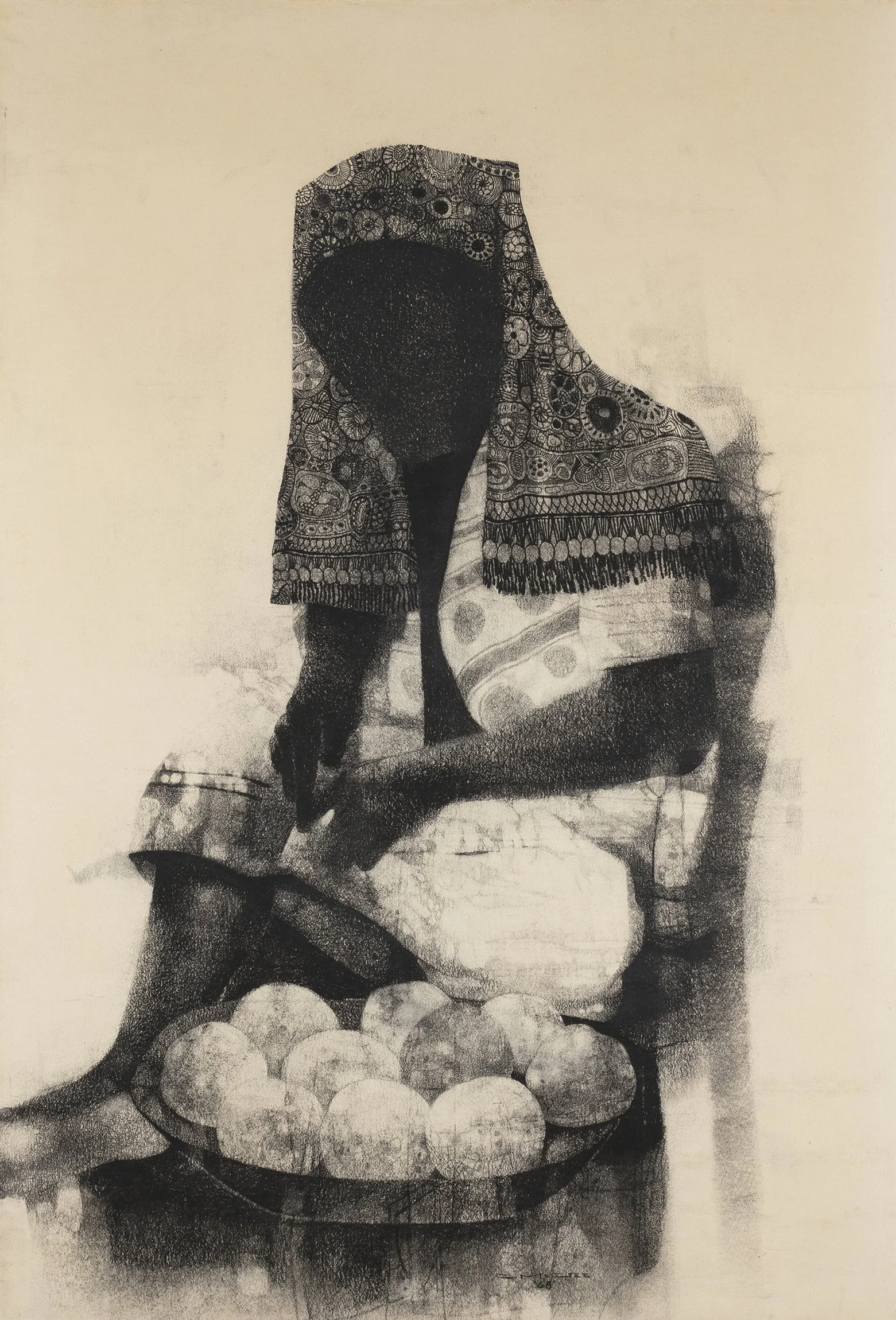
1968
charcoal and kneaded eraser on paper
39 x 27 inches
signed and dated
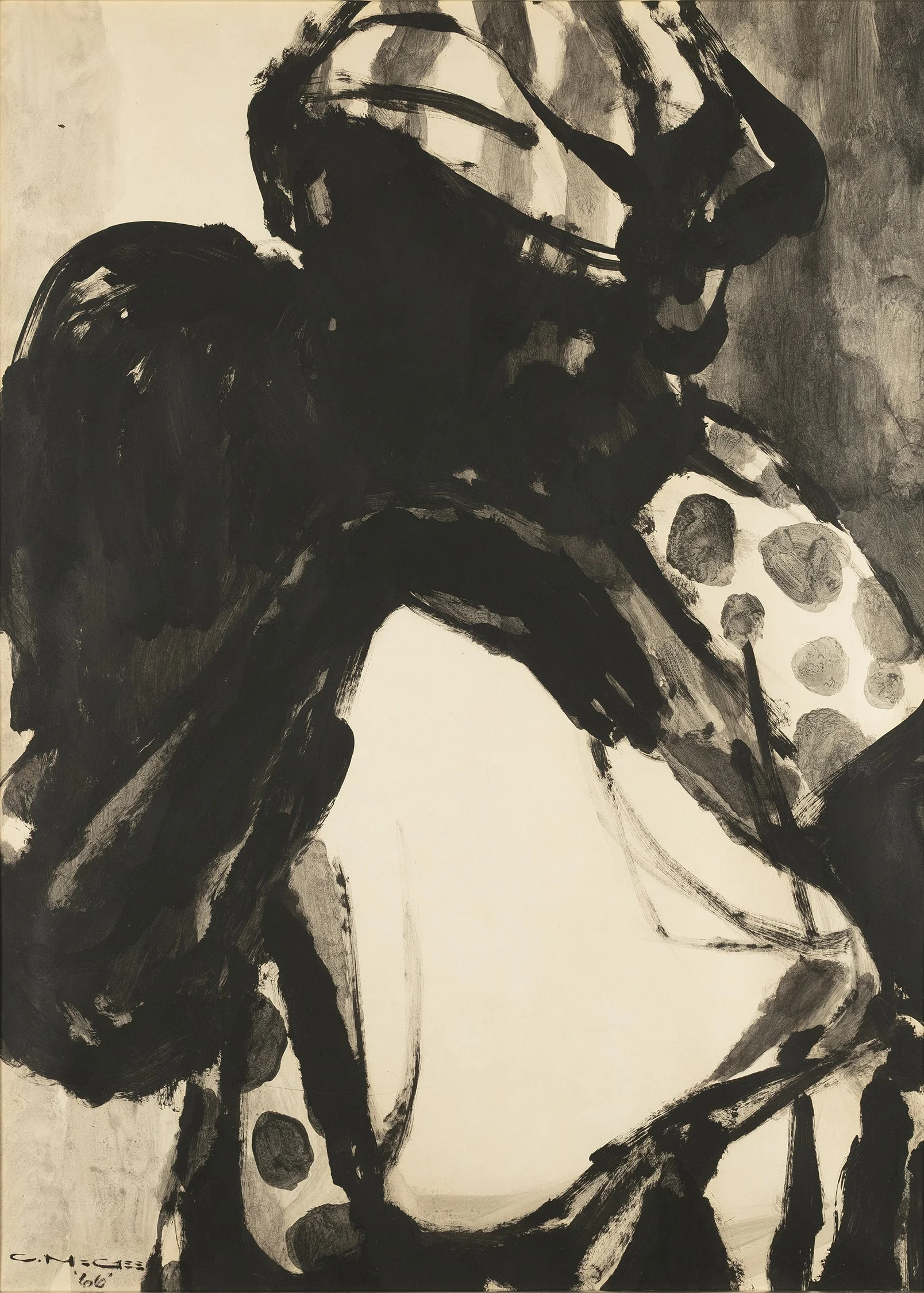
1966
brush Ink and acrylic on paper
30 x 22 inches
signed and dated