
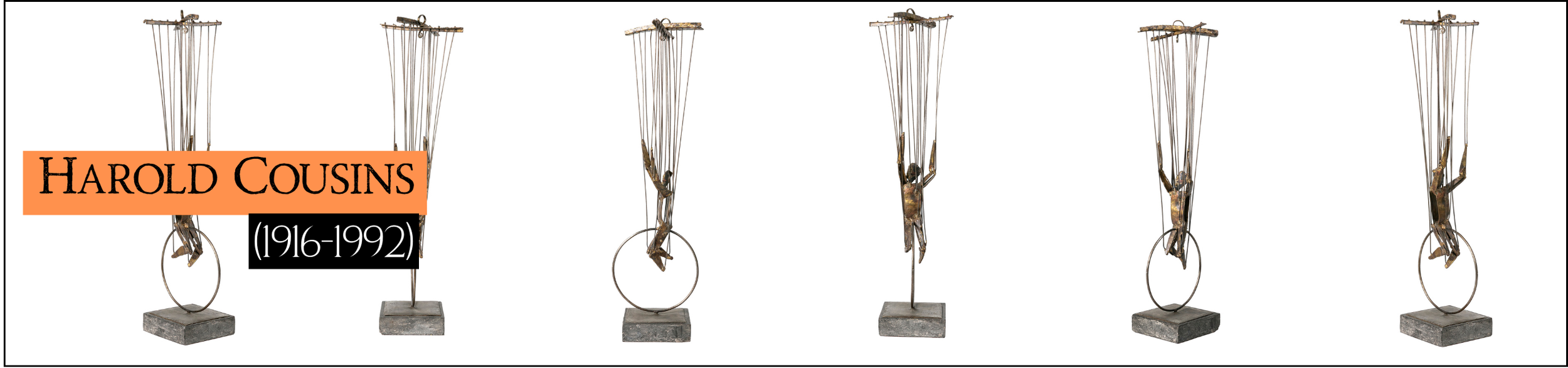
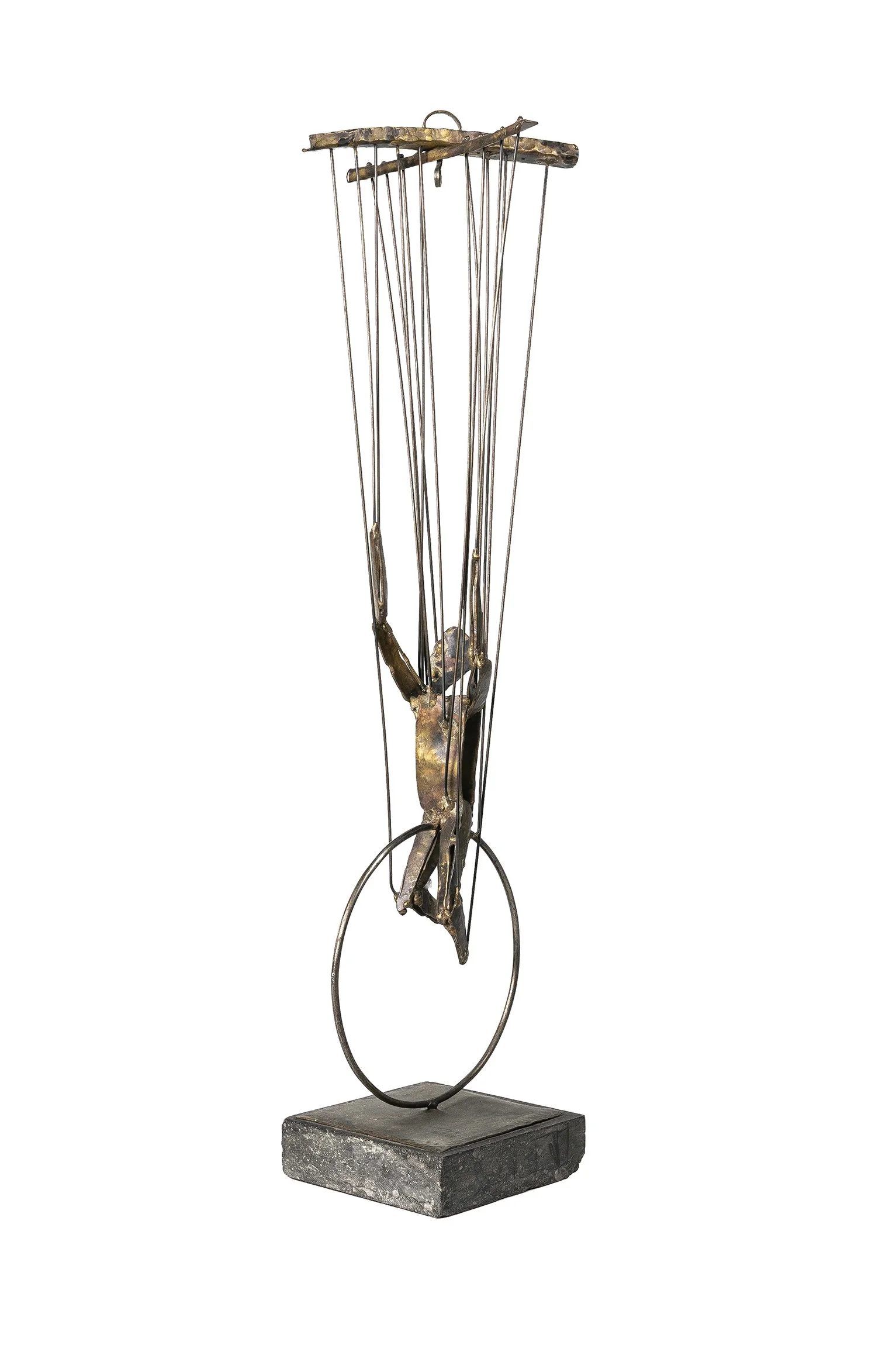
1974
various metals on a granite base
27-3/4 x 7 x 7-3/4 inches
signed and dated on base, inscribed BXL (Brussels)
A pioneering modernist sculptor, Harold Cousins was born and raised in Washington, DC, where early exposure to the cultural vitality of U Street’s “Black Broadway” shaped his artistic ambitions. After studying psychology and sociology at Howard University under influential figures such as Alain Locke and W. E. B. Du Bois, Cousins pursued sculpture while working for the U.S. Post Office and serving in the Coast Guard during World War II. In 1948, he moved to New York to study at the Art Students League, then relocated to Paris in 1949 on the GI Bill to study privately with Ossip Zadkine.
In Paris, Cousins immersed himself in European modernism and global sculptural traditions, developing a lifelong engagement with African art and direct metal techniques. A decisive turning point came in the early 1950s when he learned oxyacetylene welding, leading him to abandon traditional modeling for welded steel abstraction. By 1952 he had created his first direct-metal sculptures, soon exhibiting widely in Paris and becoming associated with the École de Paris. His linear welded works, described as “drawings in space”, and his later Plaiton sculptures, constructed from repeated metal plates, like the one offered in this auction, explored the dynamic relationship between form, space, light, and structure.
While rooted in abstraction, Cousins’ work increasingly addressed political, social, and existential themes, particularly in figurative sculptures responding to the civil rights movement and, later, his Human Comedy series. From 1967 onward, he lived and worked in Brussels, exhibiting extensively throughout Europe. Though long celebrated abroad, his work gained broader recognition in the United States later in his career, including inclusion in the Studio Museum in Harlem’s Explorations in the City of Light (1996) and the Metropolitan Museum of Art’s acquisition of Torso (1951).
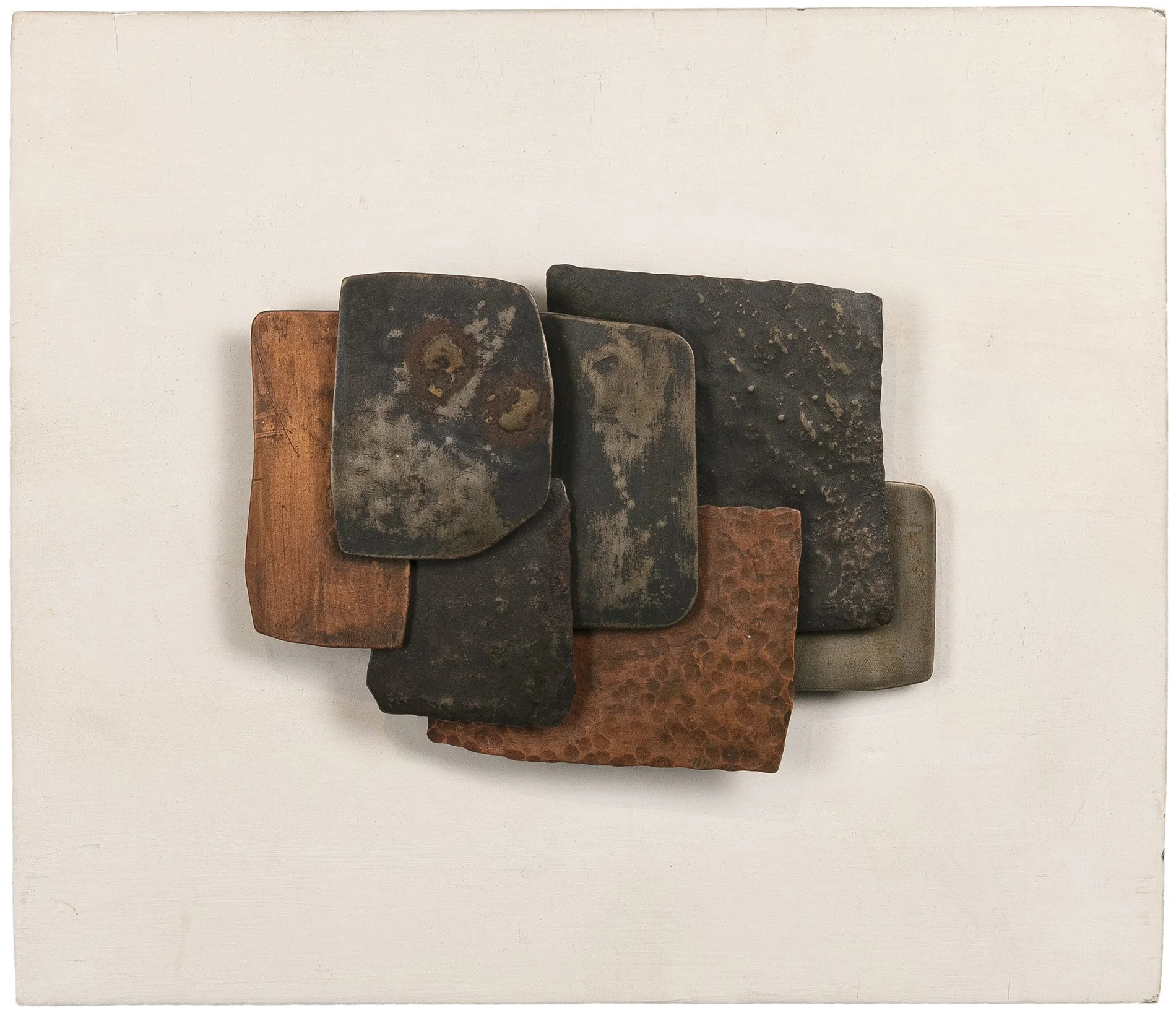
1957
copper, brass, and patinated tone metal plaques, superimposed and attached to a white painted wood backing
9-1/2 x 11-3/4 inches (overall)
signed and dated
Provenance: acquired directly from the artist, private collection, Connecticut