
Black Art Auction will be offering this important work by Hilda Wilkinson Brown in the December Signature Auction, Lot 1
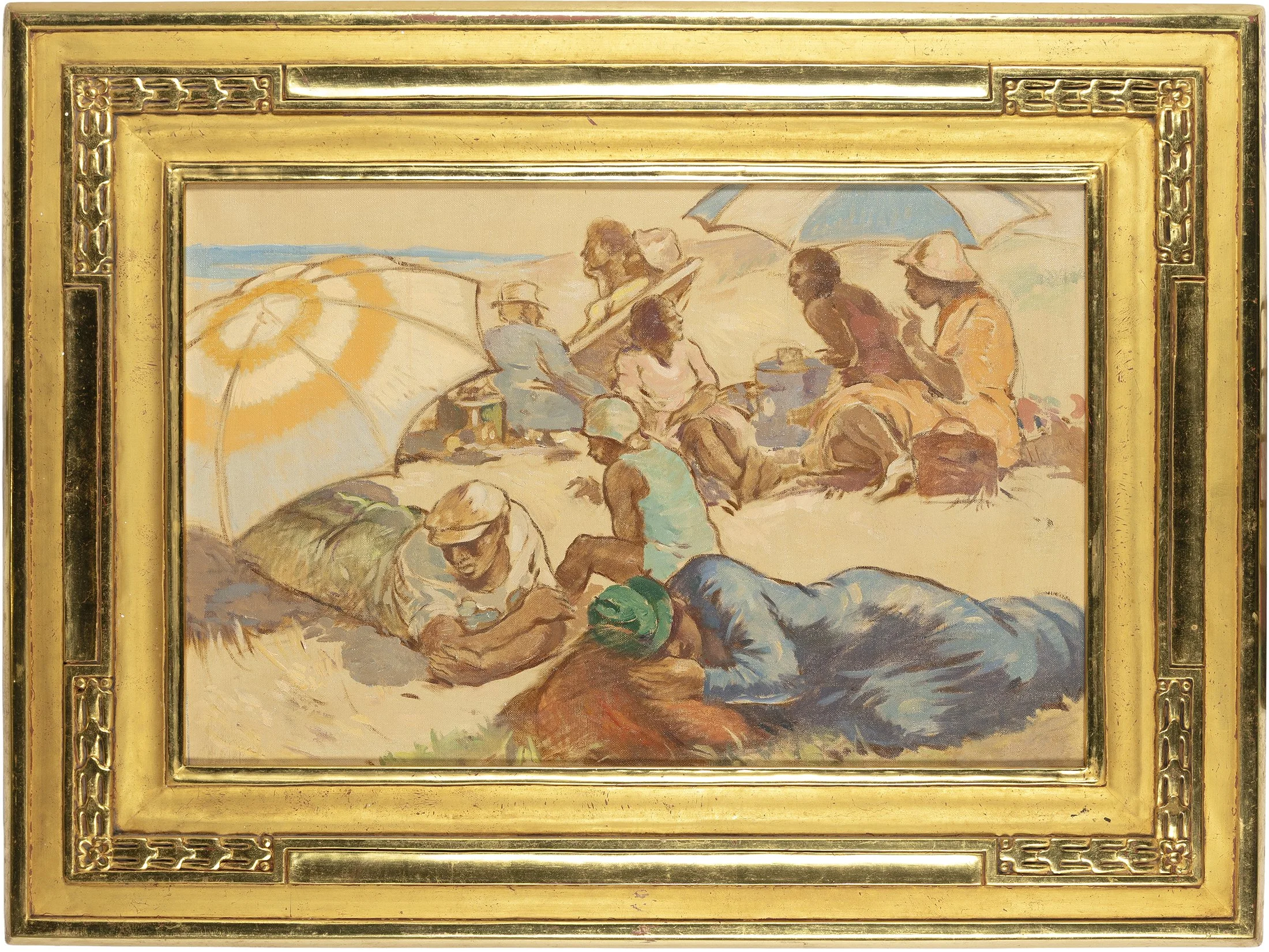
Oak Bluffs (Martha's Vineyard)
c. 1930
oil on canvas
16-1/8 x 24-5/8 inches
initialed verso
Est: $30,000-50,000
This extraordinary painting depicts the beach at Oak Bluffs, Massachusetts (Martha's Vineyard), known originally as The Inkwell, a historic African American summer resort, founded in the 1890s. That name was originally meant to be an insult issued by nearby white communities, referencing the skin color of beach-goers. Over time, that odious name became an emblem of pride and power to Black people. In the early 20th century, African Americans came to the islands to work as servants at white-owned summer homes. Eventually they became modest property owners and began offering accommodations in their cottages to other Black vacationers. Black women played a major role in this transformation. Throughout the 20th century, Black enterprise in this area continued to grow, and the area became a center of great wealth.
This work was featured in the documentary Kindred Spirits, Artists Hilda Wilkinson Brown and Lilian Thomas Burwell, by filmmaker Cintia Cabib, which may be viewed here: https://kindredspiritsfilm.com/watch-now/
Hilda Wilkinson Brown (1894-1981)
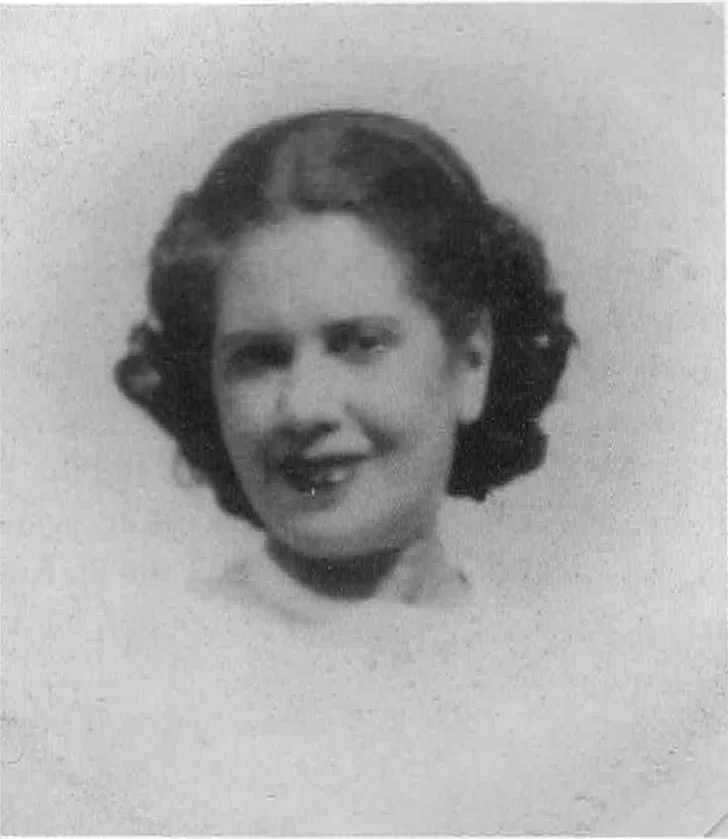
Hilda Rue Wilkinson Brown was born in Washington, D.C., the city her grandmother had made home after gaining freedom from slavery in 1835. Brown grew up in one of Washington’s most accomplished African American families, surrounded by the intellectual and cultural influence that shaped generations of Black excellence in the capital.
She graduated from the prestigious M Street High School (later Dunbar High School), a nationally renowned institution whose faculty included many of the leading Black scholars of the era. Brown continued her studies at Miner Normal School (later Miner Teachers College), where she trained as an educator before embarking on an expansive arts education that spanned some of the most important institutions in the country.
Brown pursued formal art training at the National Academy of Design, the Cooper Union Art School, and the Art Students League of New York. She later completed additional coursework at Howard University, earning a B.A. in Education. She went on to receive her M.F.A. from Columbia University, an exceptional achievement for an African American woman artist in the 1930s and early 1940s.
Brown embarked on her teaching career at Miner Normal School in 1923, where she quickly became a leading force in shaping arts education for Black students in Washington, D.C. She designed and taught the school’s curriculum in art history, design, and fine arts. This influential program introduced generations of young educators to the broader legacy of African American cultural production at a time when such histories were largely excluded from mainstream academic study.
In 1929, Brown married Dr. Schley Brown, a prominent Washington physician. The couple settled in LeDroit Park in 1934, purchasing a home at Third Street and Rhode Island Avenue, NW, in one of the capital’s most distinguished Black neighborhoods. They also maintained a summer residence in Oak Bluffs on Martha’s Vineyard, a historic enclave for African American professionals and artists. That community would become an important place of fellowship and creative exchange, especially for her extended family, including her niece, the painter and art educator Lilian Thomas Burwell.
As a working artist during the interwar years, Brown produced illustrations for key African American publications, including The Crisis and The Brownies’ Book, both edited by W.E.B. Du Bois. Her contributions to these magazines placed her squarely within the visual culture of the Harlem Renaissance, helping shape the representation of Black childhood and modern Black identity in the early twentieth century.
Brown exhibited widely in the 1930s, including at Howard University (1932, 1937), the Texas Centennial Exposition (1936), and the First Annual Metropolitan State Art Contest at the U.S. National Museum (1936). Her work later entered the collections of major institutions, among them Hampton University, Howard University, the Barnett-Aden Collection, the Metropolitan Museum of Art, the Smithsonian American Art Museum, the Harmon Foundation, and the Art Institute of Chicago, affirming the significance and reach of her artistic practice.
Throughout the 1940s and 1950s, Brown continued her dual practice as an educator and artist, balancing a demanding teaching career with the steady production of prints, drawings, and paintings. Her work often centered on intimate domestic scenes, floral still lifes, and street views of Washington, D.C. Although not formally associated with a single stylistic school, Brown’s modernist inflections align her with a generation of African American artists who blended academic training with the evolving visual languages of American Scene painting and early modernism.
Brown remained deeply rooted in the cultural life of Washington. Her home in LeDroit Park became a gathering place for artists, educators, and intellectuals, and her commitment to community shaped her decades-long tenure in the D.C. public school system. In addition to her work at Miner, she later taught at Cardozo High School, where she influenced hundreds of students and helped establish a foundation for arts education in the city during a period of tremendous social change.
In recent years, Brown’s work has garnered renewed scholarly and institutional attention as museums and historians continue to reassess the contributions of early twentieth-century Black women artists. The presence of her work in major collections, including the Metropolitan Museum of Art, the Art Institute of Chicago, and the Smithsonian American Art Museum, underscores the quality and historical value of her practice. Exhibitions and publications focusing on Black modernism, Washington’s Black Renaissance, and women printmakers have further helped restore Brown to the broader narrative of American art.