
Made in Louisville
G.Caliman Coxe (1907-1999)
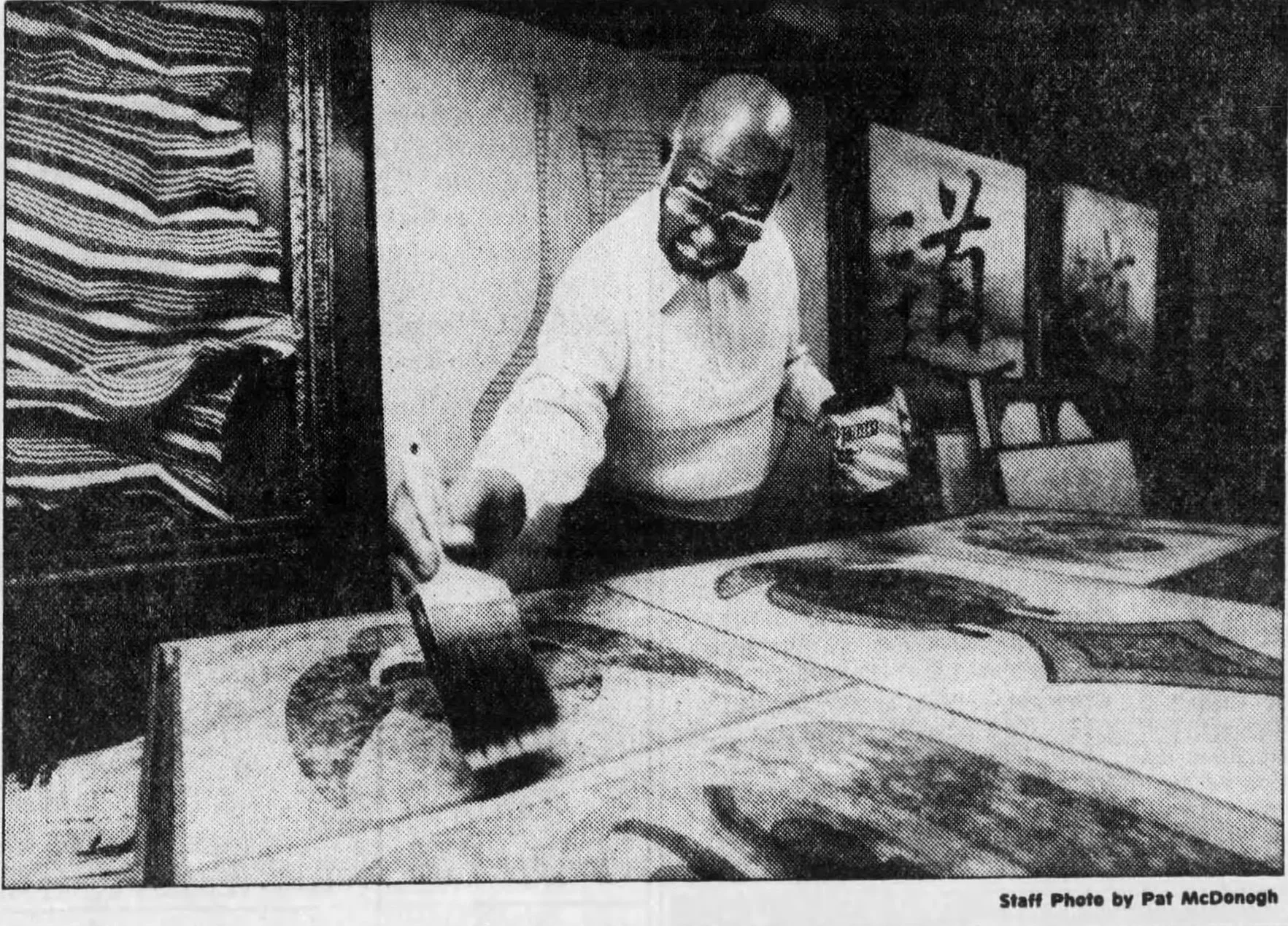
G. Caliman Coxe in his studio at his home in west Louisville, The Courier-Journal, Feb 02, 1986.
Known for his experimental abstract art, Gloucester Caliman Coxe was considered the “dean of Louisville’s African American artists”, a community which included such future luminaries as Bob Thompson, Greg Ridley, Sam Gilliam, and Kenneth Young. He and his three brothers were taught the fundamentals of drawing and composition by their father, a Presbyterian minister and school principal.
Coxe made a living as an illustrator, worked for local theaters, and created training aids at the Fort Knox Army Base before entering the University of Louisville, in his 40’s, to study art. He was the first African American to receive the Allen R. Hite scholarship and the first black fine arts graduate of the university.
“G. Caliman Coxe is the epitome of the craftsman and technician who has fought many battles to achieve the right mixture of paint, the right balance and composition and the right texture and surface quality. When you talk of the struggles of Black artists, you talk about G. Caliman.”
Coxe established the Louisville Art Workshop in 1969, where artists of all races could create and show their work. The catalog for Black Artists/South, mentions that, “Coxe periodically burned a number of his paintings because of a lack of space to exhibit them, outside his sign shop and church basements.”
His work has been featured in exhibitions, including Paintings by G.C. COXE: 4 phases, Carl Van Vechten Gallery, Fisk University, Nashville, TN, 1972; Beyond 1984: Contemporary Perspectives on American Art: an exhibition of Afro-American Artists, Trisolini Gallery of Ohio University, 1985; Black Artists / South, Huntsville Museum of Art, AL, 1979; Black Art Today in the South, Memphis State University, The University Gallery, 1982; and the National Exhibition of Black Artists, Smith Mason Gallery of Art, Washington DC, 1971. In 1991, G. Caliman Coxe Retrospective, an overview of 40 years of his career, was held at the Louisville Urban League, KY, and in 1995, Gloucester Caliman Coxe A Retrospective: Rags and Wires, Sticks and Pantyhose Too, was held at the University of Louisville. This exhibition featured 72 abstract paintings and constructions. Most recently, in 2013, his a selection of his work was shown at the Kentucky Center for African American Heritage.
REF: Hudson, Ralph M. Black Artists/South. Huntsville Museum of Art, 1979.
Lansdell, Sarah. “Coxe Show Flashes Dazzle at Workshop.” The Courier-Journal & Times, 5 May 1968, p. G14.
“His work reflects his seeing what he calls ‘the transparency of things’ - of penetrating the overlapping edges and thicknesses of form to see ‘a conglomeration of things all at once’ as the Cubists did.”
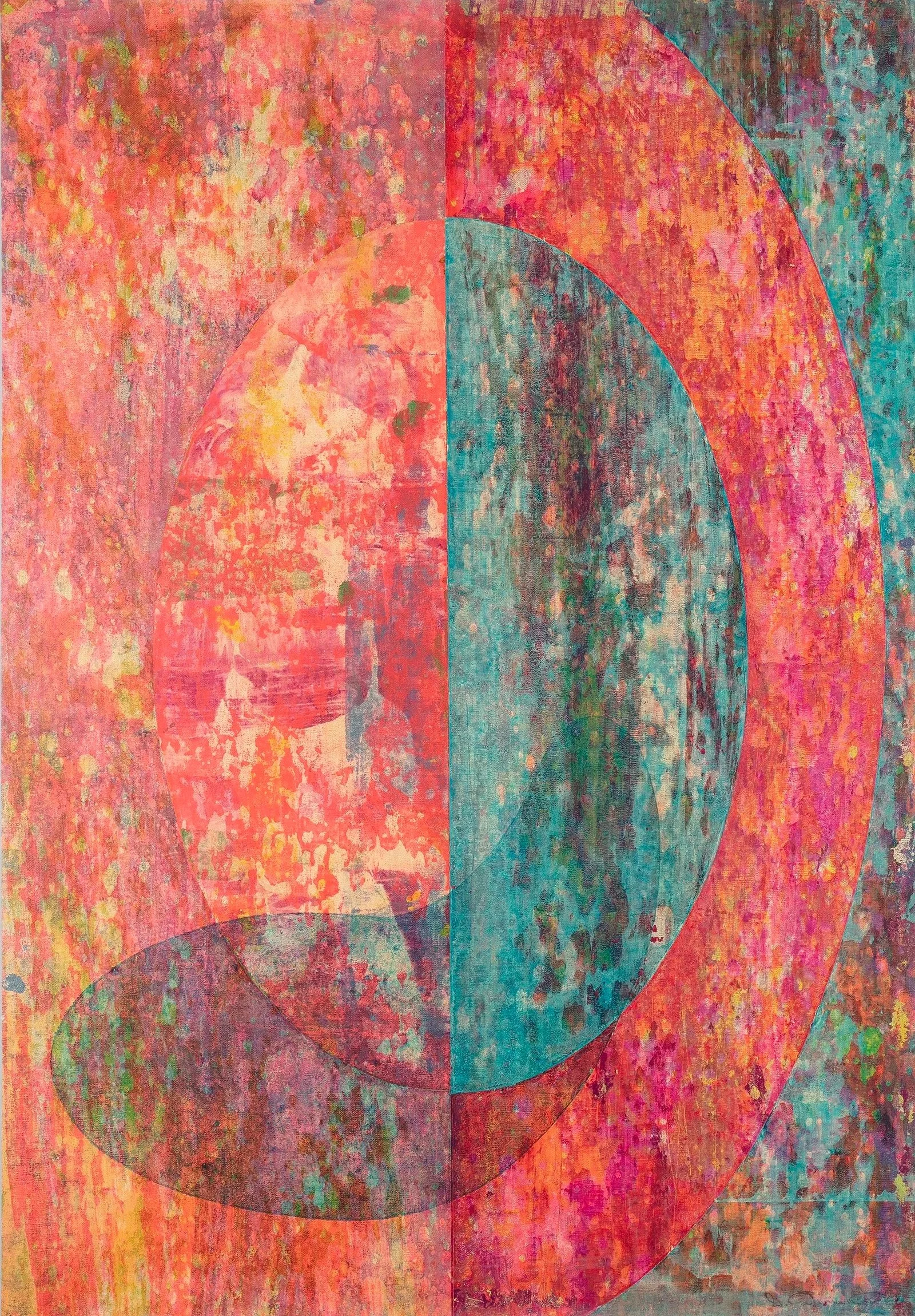
oil on canvas
46-1/4 x 32 inches
signed, dated, titled verso
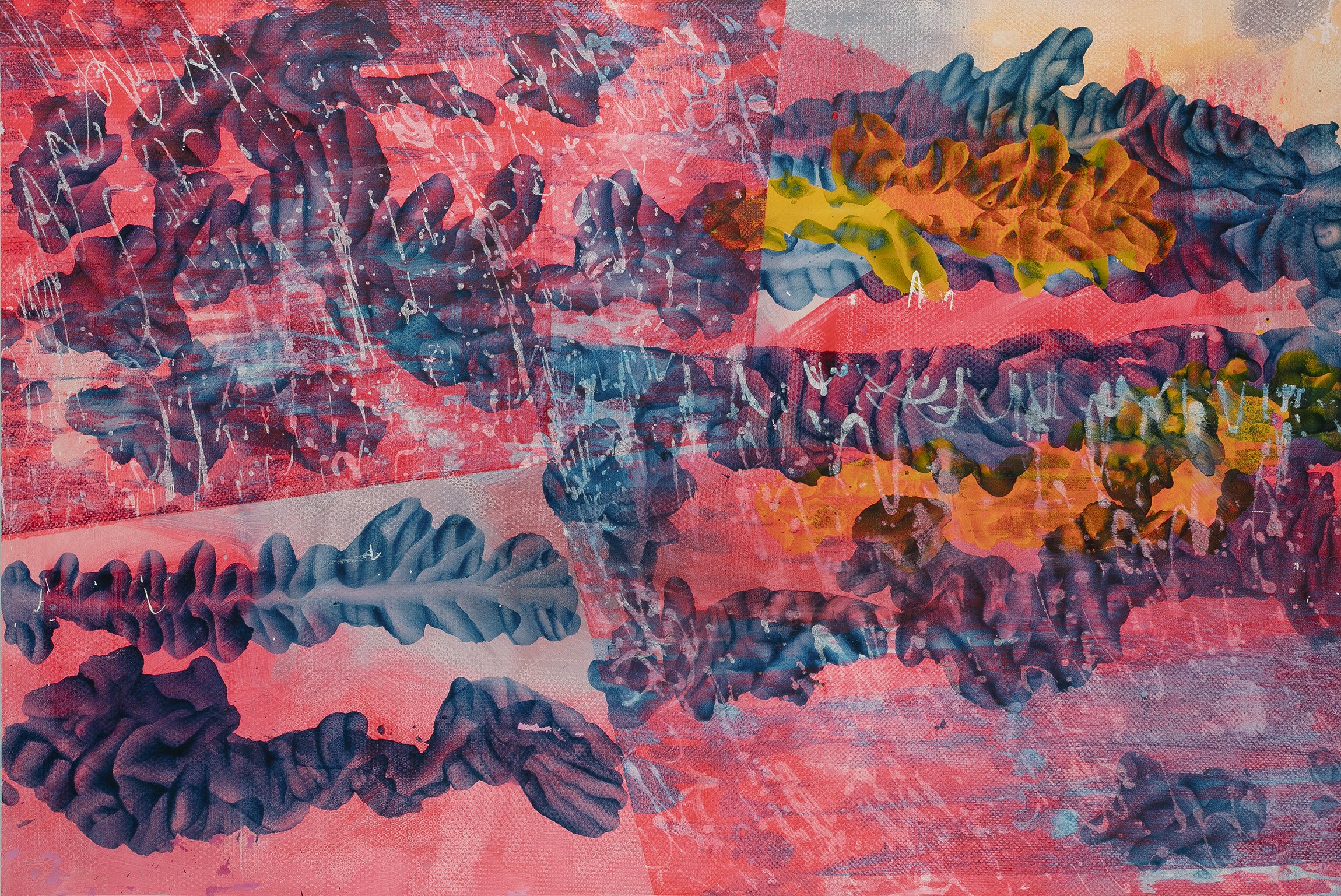
1987
oil on canvas
32 x 45 inches
signed, dated, titled verso
Kenneth Victor Young (1933-2017)
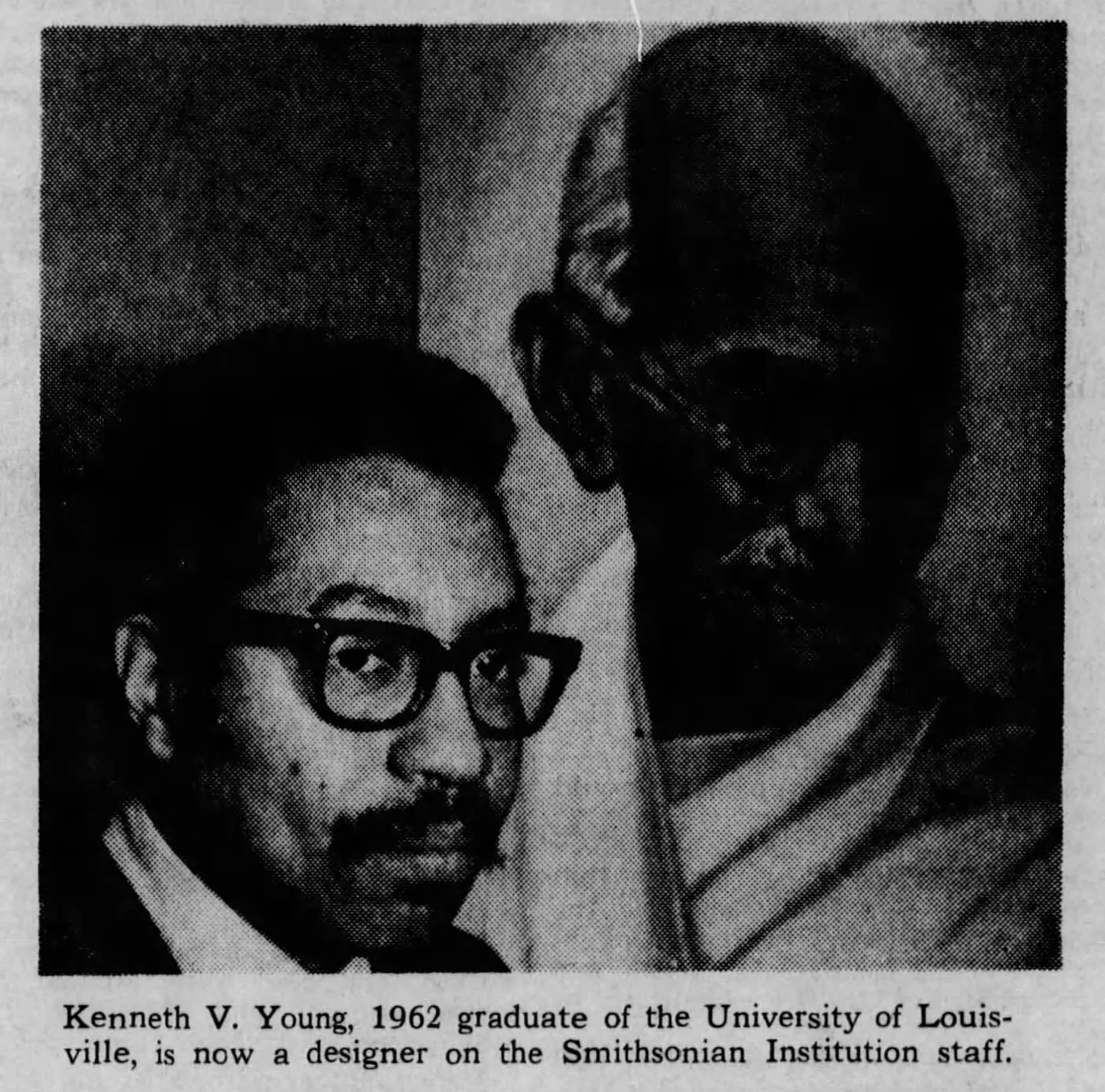
Kenneth Young was born in Louisville, KY in 1933. He initially studied physics at the University of Louisville, KY but graduated with a degree in fine arts in 1962. While in Louisville, he joined Gallery Enterprise, a black artist’s group that counted Bob Thompson and Sam Gilliam among its members.
Young moved to Washington DC in 1964 and took a job at the Smithsonian Institution, where he served as an exhibition designer. He also worked for the United States Information Agency as a design specialist, making frequent trips to Egypt and other African nations to consult with curators on their exhibition design. While pursuing his career, Young continued to paint and became acquainted with the Washington Color School artists. He received his first one man show at Franz Bader Gallery in 1968. Other important solo exhibitions were held at Fisk University in 1973 and the Corcoran Gallery, Washington DC, in 1974.
In the catalog essay for the exhibition, The Language of Abstraction, Ed Clark, Richard W. Franklin, and Kenneth Young (2018), Dr. Jennifer Cohen writes,
“During the late 1960’s and early 1970’s, Young pushed the formal boundaries of color painting while invoking a wide range of sources and allusions. His works referred to beauty found in nature, the history of art, and the politics of the civil rights era. He used diluted acrylic pigments on raw canvas to explore, as he put it, beginnings and endings, probing the boundaries between vibrant colors with complex bleeds and blurs. Working on the floor or a table, Young would introduce pigments to a selectively dampened canvas with a brush. Then, with a sponge and spray bottle at hand, he would control the bleeds by alternately dampening and drying areas of the composition.”
Young’s painting, Red Dance (1970) is in the permanent collection of the National Gallery of Art. The painting first gained attention when it was featured in Black Art in America, a 1970 article by Barbara Rose in Art in America.
His work has been included in numerous exhibitions including: Washington: 20 Years, Baltimore Museum of Art, MD, 1970; Black American Artists/ 71, Illinois Arts Council, 1971; Art in Washington and Its Afro-American Presence 1940-1970, Washington Project for the Arts, 1985; African American Art: Harlem Renaissance, Civil Rights Era, and Beyond, Smithsonian Museum of American Art, 2012; and most recently, Kenneth Victor Young: Continuum, held at American University museum in 2019.
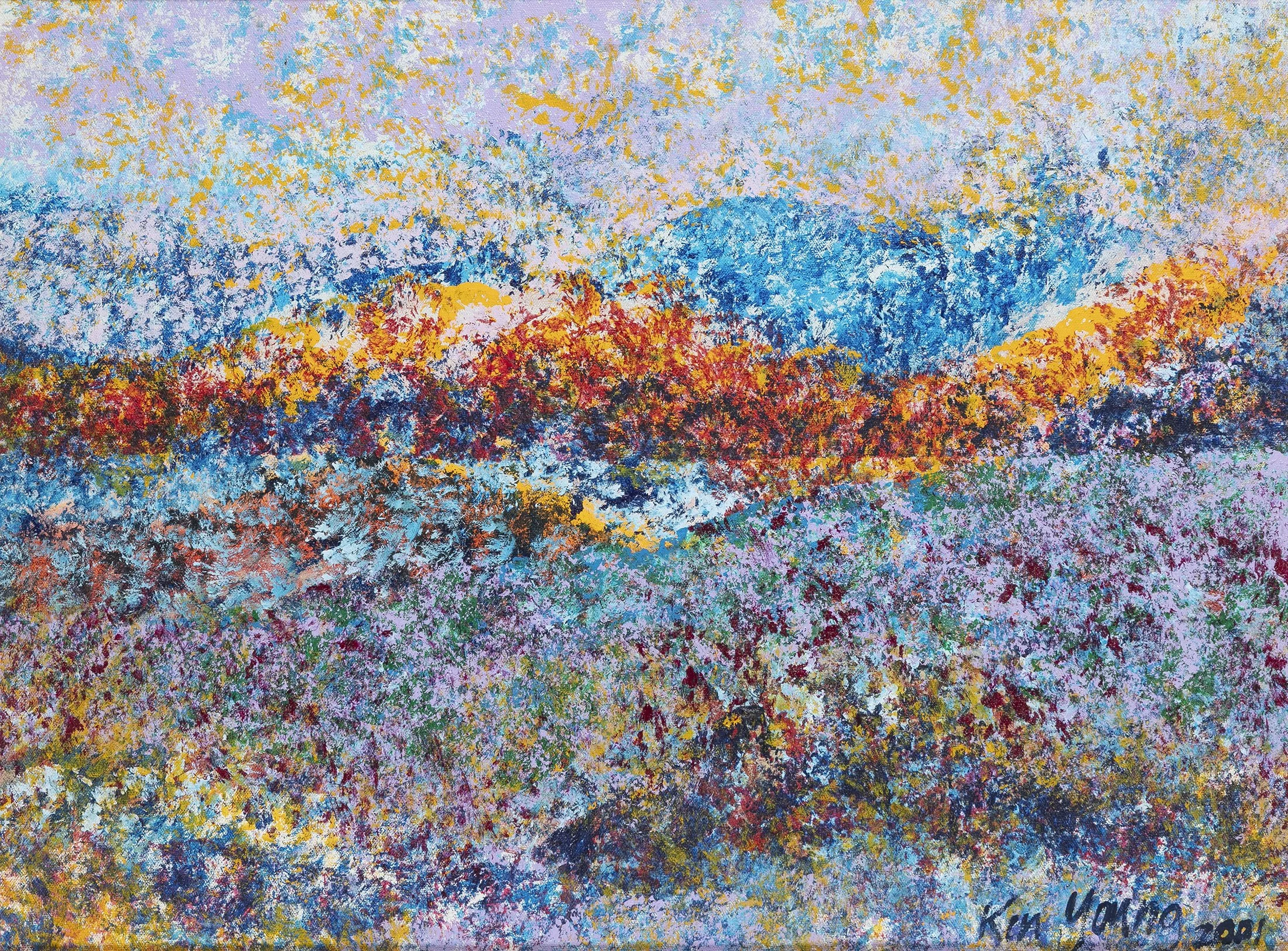
c. 2000
acrylic on canvas
18 x 24 inches
signed
Provenance: Private collection, Washington, DC
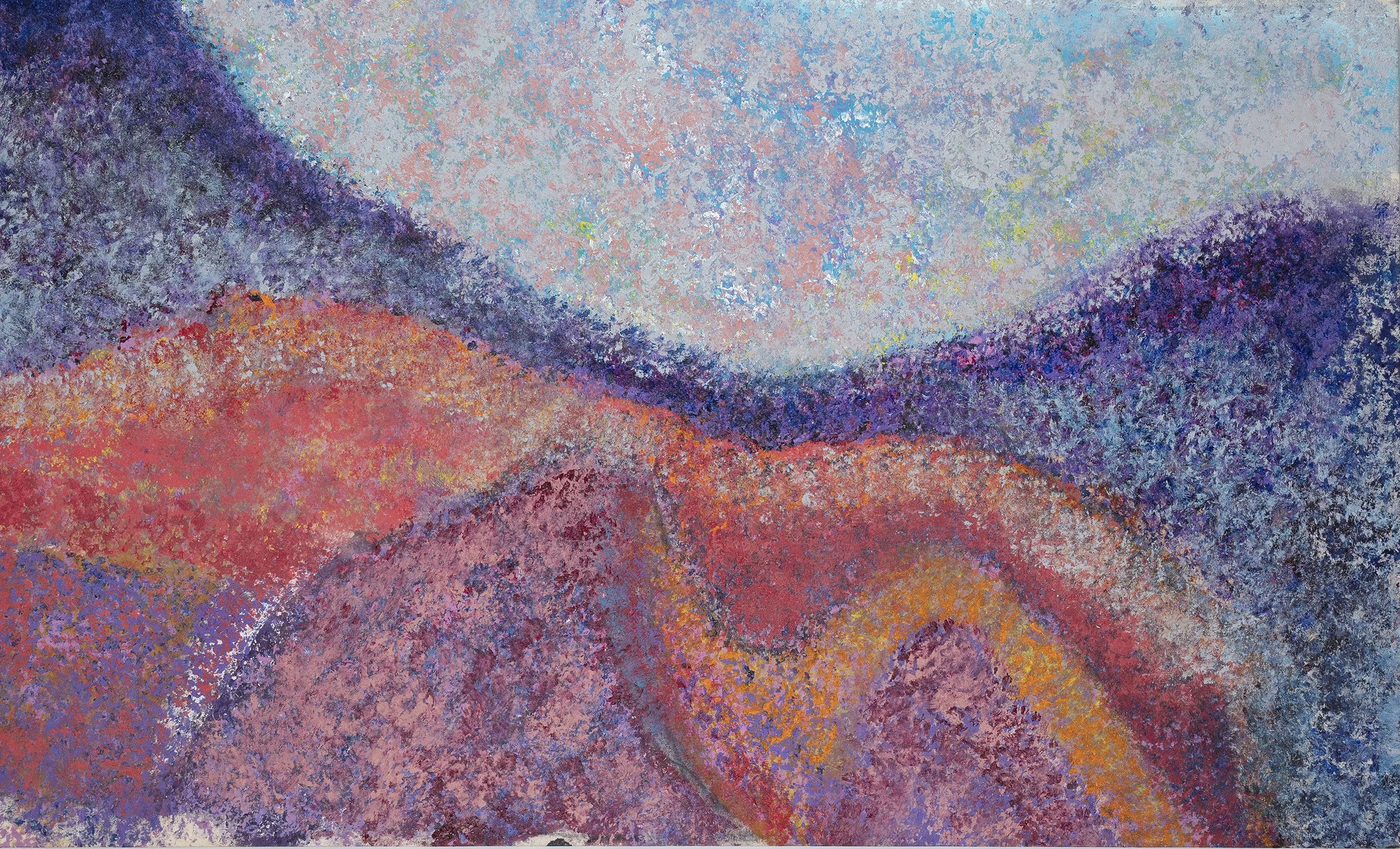
1994
acrylic on canvas
30 x 50 inches
signed, dated, and dedicated
Sam Gilliam(1933-2022)
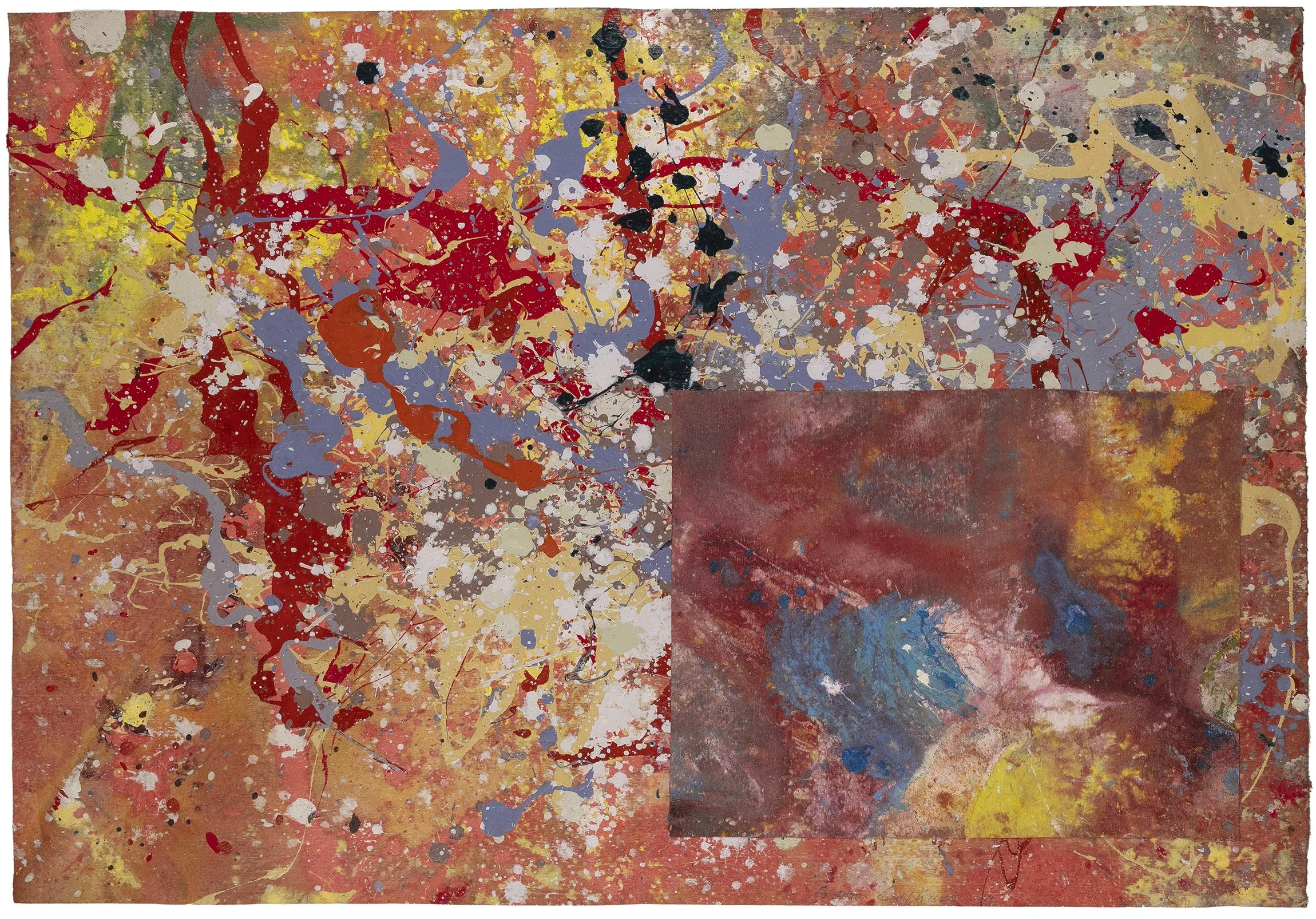
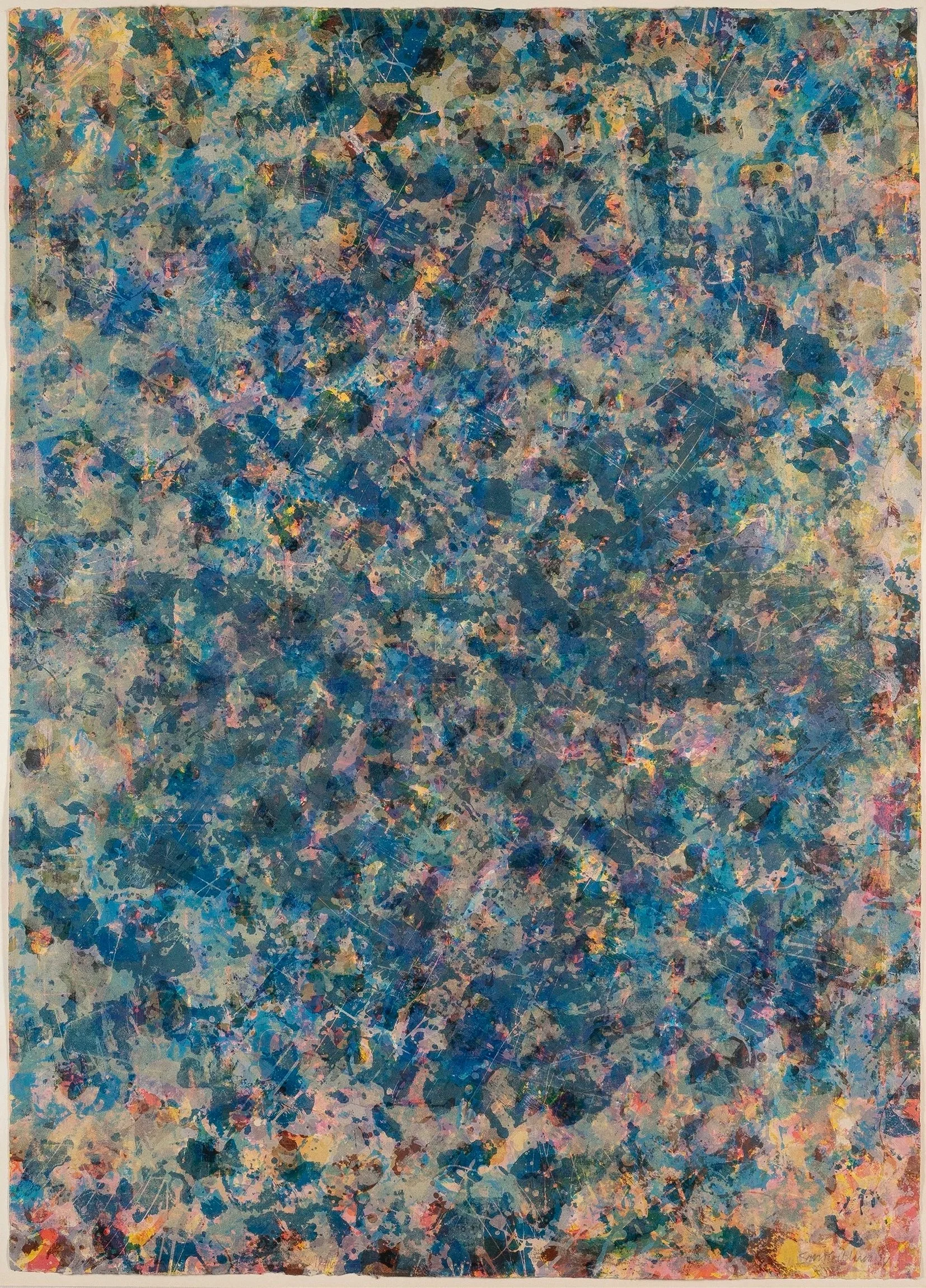
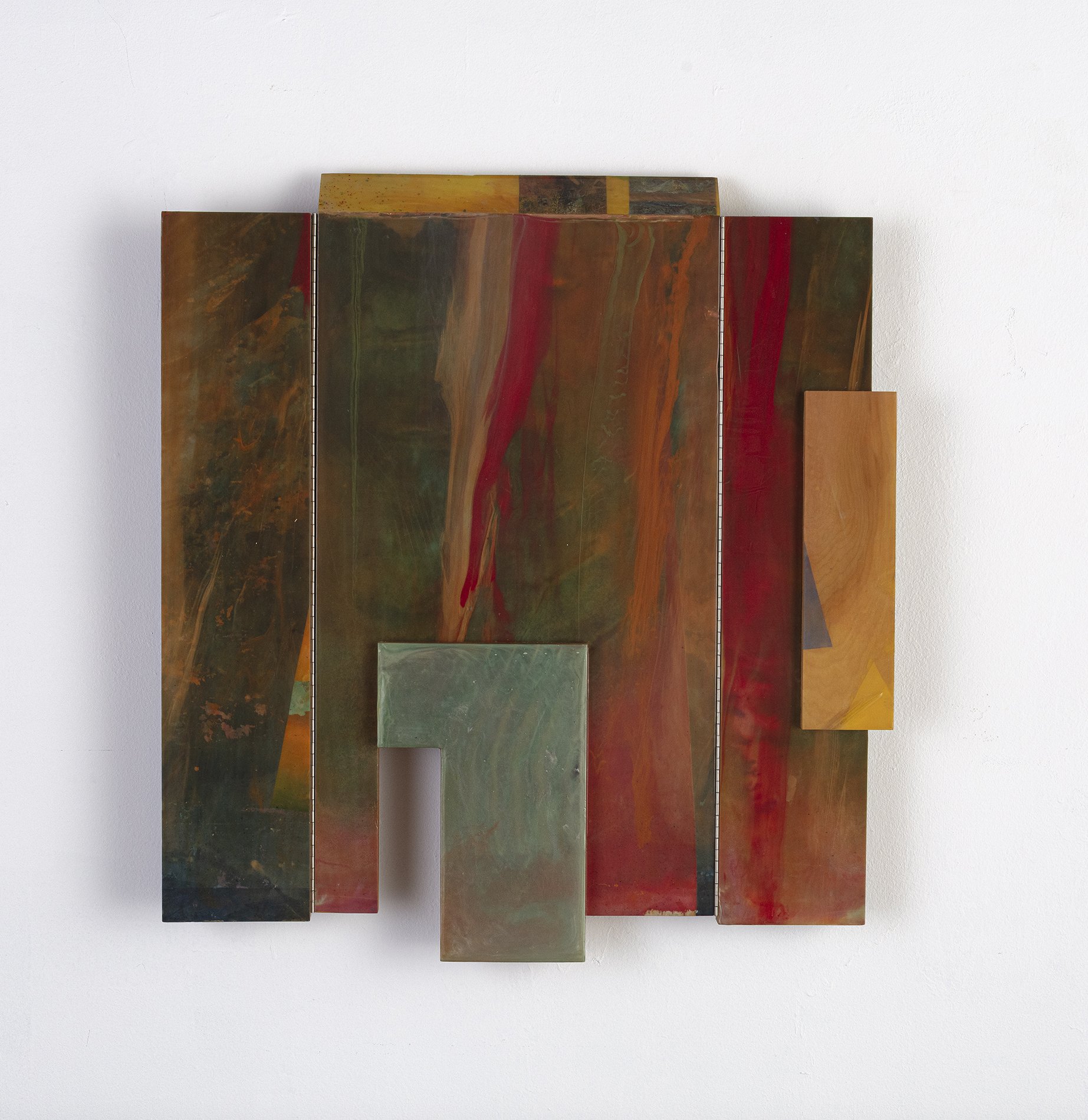
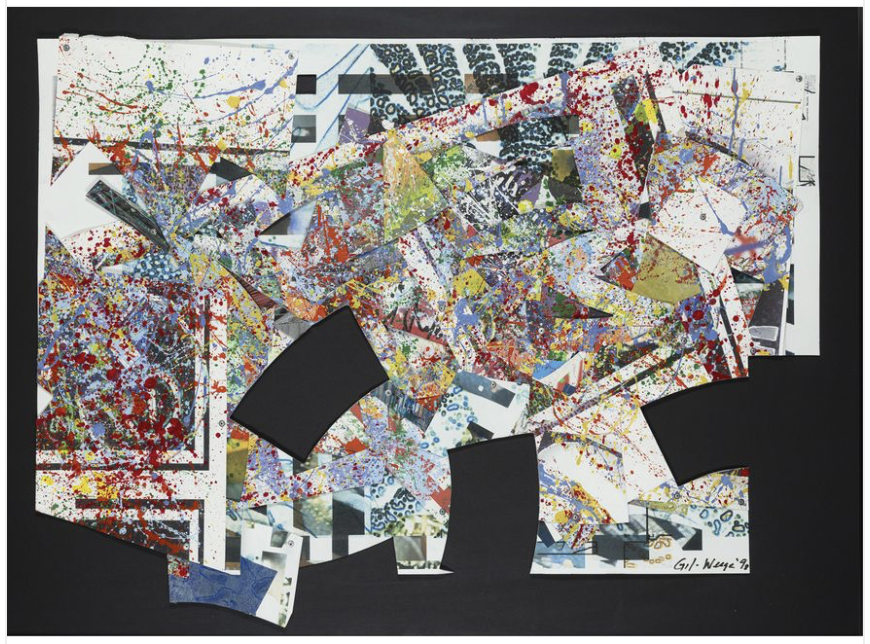
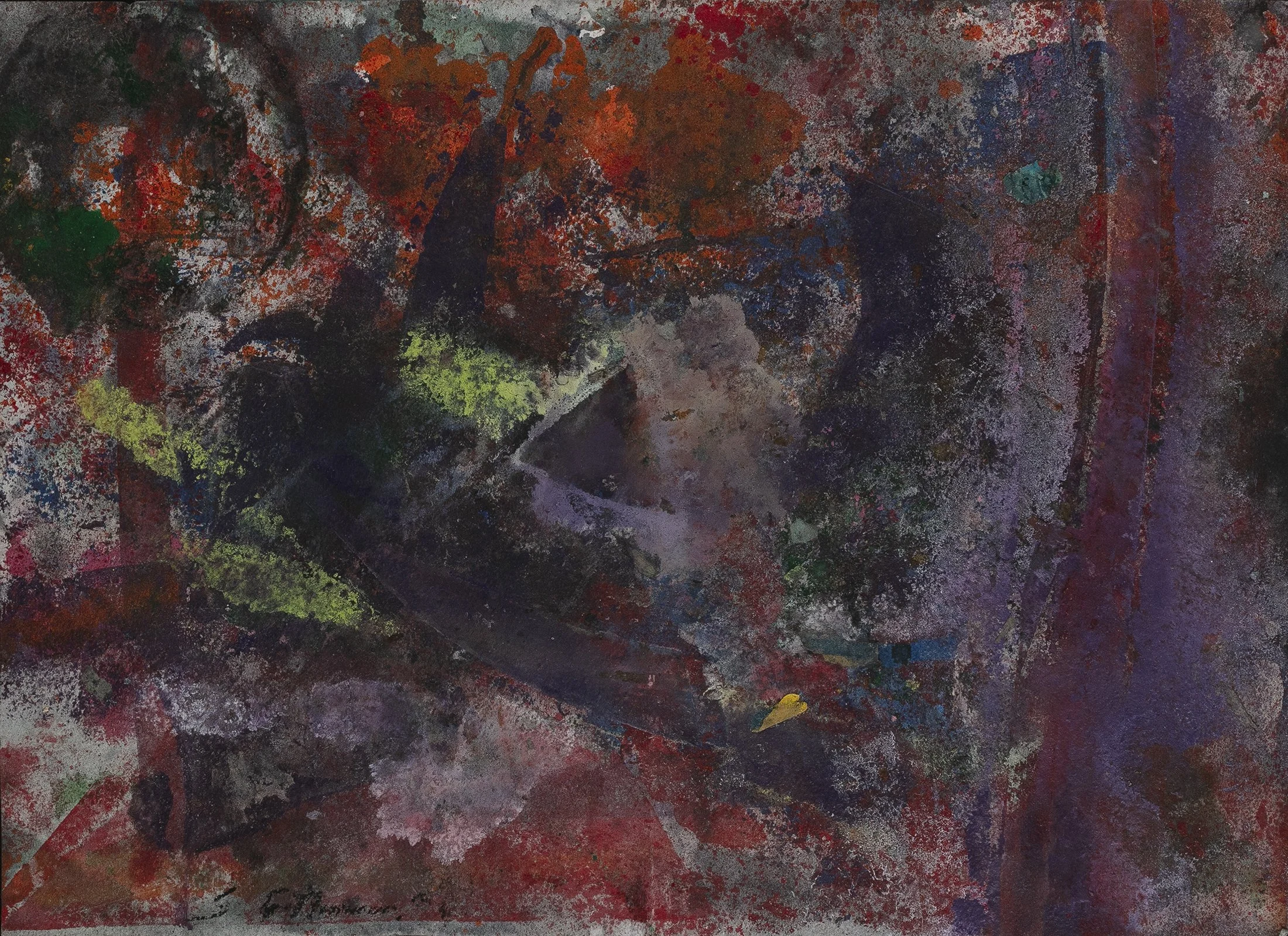
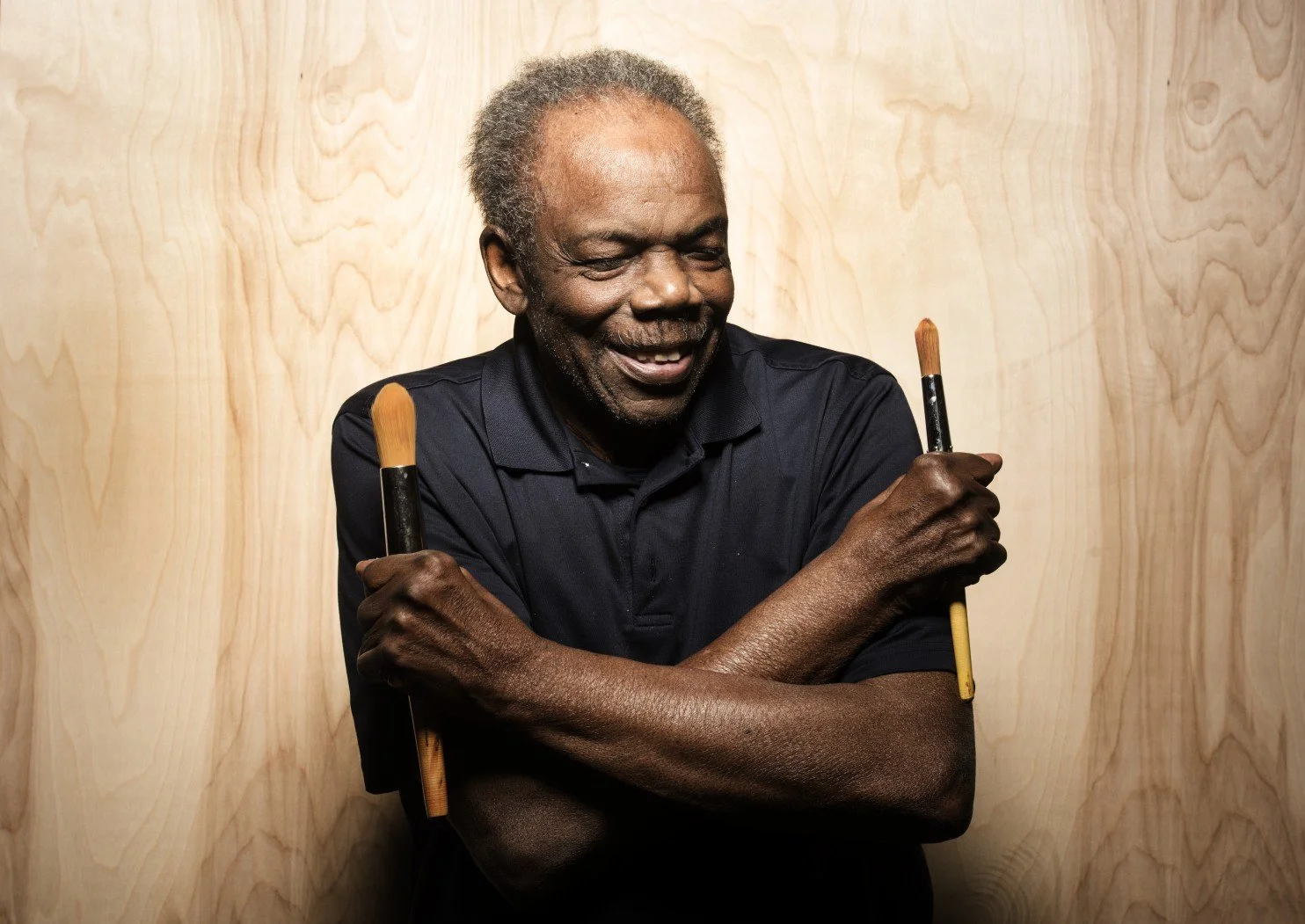
Sam Gilliam was born in Tupelo, Mississippi, in 1933. Shortly after his birth, the family (Gilliam was one of eight children) moved to Louisville, KY, where he was raised. Gilliam attended the University of Louisville, earning a BFA in 1955. That same year, his first solo exhibition was held at the university. He went on to serve in the Army and, upon his return, began working towards his MFA.
After graduation, he taught for a year in the Louisville public schools before moving to Washington, D.C., where he lived for the rest of his life. Gilliam continued to teach in the Washington public schools, as well as at the Maryland Institute College of Art, the University of Maryland, and Carnegie Mellon University in Pittsburgh, throughout his career.
By the time Gilliam arrived in Washington, D.C. in 1962, the Washington Color School had been established and included Morris Louis, Kenneth Noland, and Thomas Downing. Gilliam met and became friends with Downing, and soon after, Gilliam’s works became large, hard-edged abstractions. His works evolved as he continued to experiment with innovative methods, taping and pouring colors, folding and staining canvases. He created beveled-edge paintings in which he stretched the canvas on a beveled frame, so that the painting appeared to emerge from the wall on which it was hung.
In 1965, he abandoned the frame and stretcher altogether and began draping and suspending his paint-stained canvases much like hanging laundry on the clothesline. Each work could be improvised and rearranged at will. The first of these was displayed at the Corcoran Gallery of Art in 1969. Gilliam received numerous public and private commissions for his draped canvases. One of the largest of these was Seahorses in 1975. This six-part work involved several hundred feet of paint-stained canvas installed along the exterior walls of two adjacent wings of the Philadelphia Museum of Art. In 1972, he represented the US in the Venice Biennale. In 1975, Gilliam also began creating dynamic geometric collages influenced by Miles Davis and John Coltrane, and later produced similar collages in monochromatic black hues.
Reinvention has been a consistent component in Gilliam’s work throughout his career, and he continued to innovate, disrupt, and improvise until his passing in 2022.
Gregory Ridley (1925-2004)
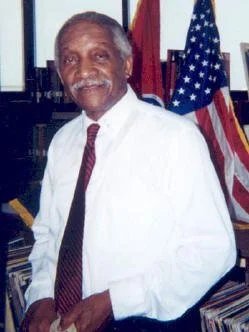
Gregory D. Ridley, Jr. was born in Smyrna, Tennessee in 1925 and moved with his family to Nashville in 1936. After serving in the United States Navy during World War II, he enrolled at Fisk University, where he studied with Aaron Douglas, the celebrated Harlem Renaissance painter and muralist. Douglas became not only Ridley’s teacher but also a lifelong mentor and friend, helping to shape Ridley’s understanding of art as a vehicle for history, cultural memory, and Black self-representation.
Ridley continued his studies at Tennessee State University, earning a degree in art education in 1951. He then pursued graduate work at the University of Louisville, where he studied with Ulfert Wilke, Justus Bier, Walt Cress, and Creighton Gilbert. In 1955, Ridley earned his Master of Fine Arts degree from the university, becoming the first person to receive that degree from the University of Louisville. His years in Louisville were formative, placing him in a rigorous academic environment where he refined the technical and historical foundations that would inform his later work as both an artist and educator.
That same commitment to teaching defined much of Ridley’s career. He accepted a position at Alabama State University in 1951 and went on to teach at several institutions, including Grambling State University, Elizabeth City State College, Tennessee State University, Fisk University, Morehouse College, and the City University of New York, where he served as studio artist, lecturer, professor of art, and museum coordinator.
As an artist, Ridley worked in painting, sculpture, and metal repoussé, developing a visual language rooted in African forms, African American history, and modernist design. In keeping with the philosophy of Alain Locke, he explored African heritage not as a historical reference alone, but as a living source for contemporary Black artistic expression. His Ngere Mask Series, several examples of which are displayed in Fisk University’s library, reflects this sustained interest in African visual traditions. He also produced a series of copper panels for Fisk University, including a pair of repoussé sculpted panels that adorn the entrance doors to the Carl Van Vechten Gallery of Fine Art
Ridley’s mastery of copper repoussé brought him particular acclaim later in his career. In 1998, he was commissioned to create a major public artwork for the Nashville Public Library: A Story of Nashville, a series of eighty hammered copper panels installed in the library’s Grand Reading Room. The panels form a continuous visual history of the city, extending from the pre-settlement period into the modern era. In 2003, the library honored him with the retrospective exhibition Gregory Ridley: From the Hands of a Master, surveying more than five decades of his work. Ridley died in Nashville in 2004, leaving a legacy as a painter, sculptor, teacher, and cultural historian whose art joined African diasporic memory with the civic and institutional history of Tennessee.
References:
Amistad Research Center, “Gregory Ridley, Jr.,” artist profile, accessed May 2026; https://amistadresearchcenter.org/artist/gregory-ridley-jr
Tennessee State University Library, “Gregory D. Ridley, Jr. (1925–2004),” Profiles of African Americans in Tennessee; https://ww2.tnstate.edu/library/DIGITAL/GregRidley.pdf
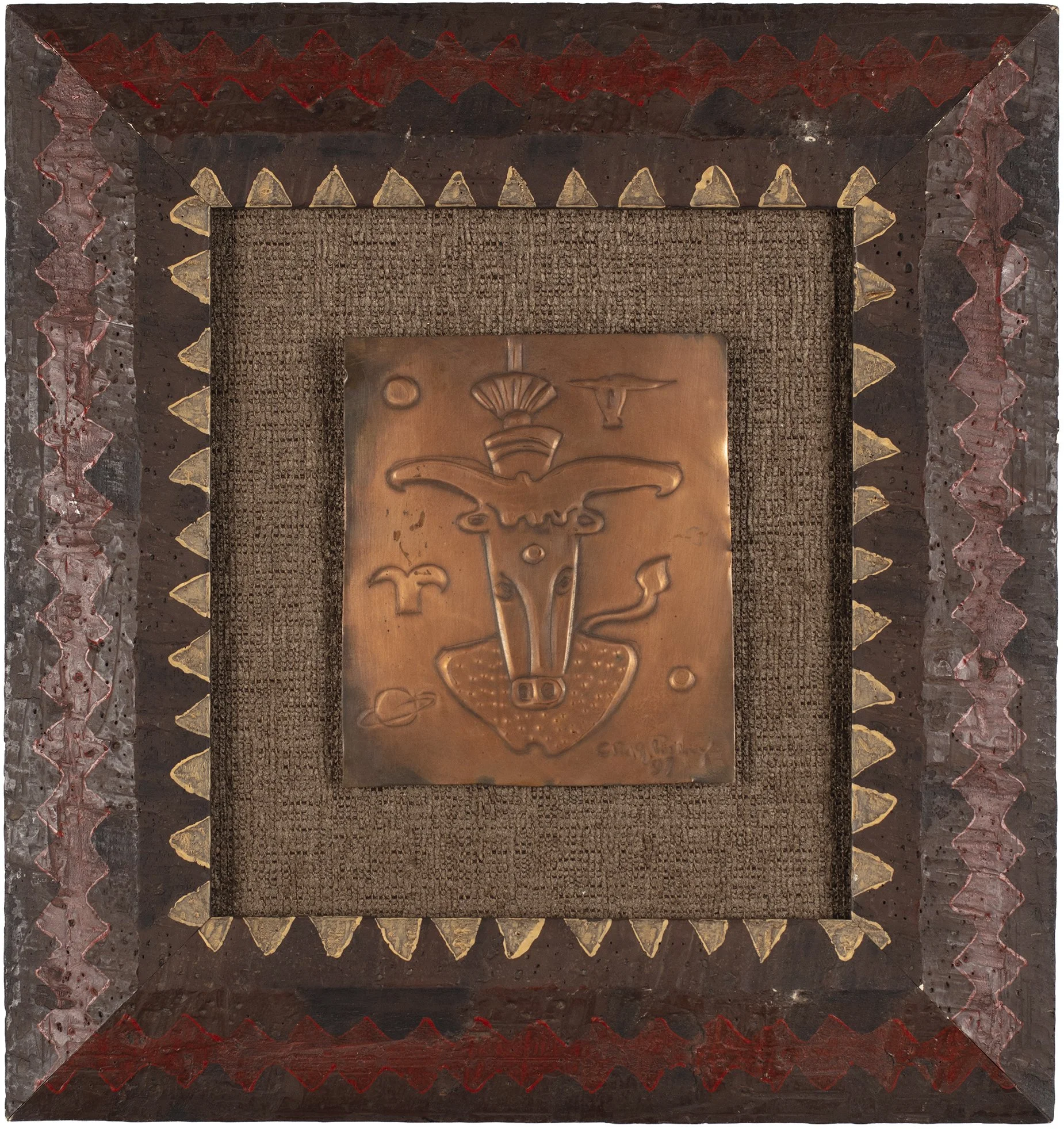
1997
copper repousse mounted on linen
6 x 5-1/4 inches
signed and dated